

The apothecary
Gond katira and babul gond: two gums, two seasons, two methods
One is soaked cold and swells into a summer gel. The other is roasted in ghee for winter laddoos. They are not interchangeable, and swapping the method is the most common mistake on this shelf.
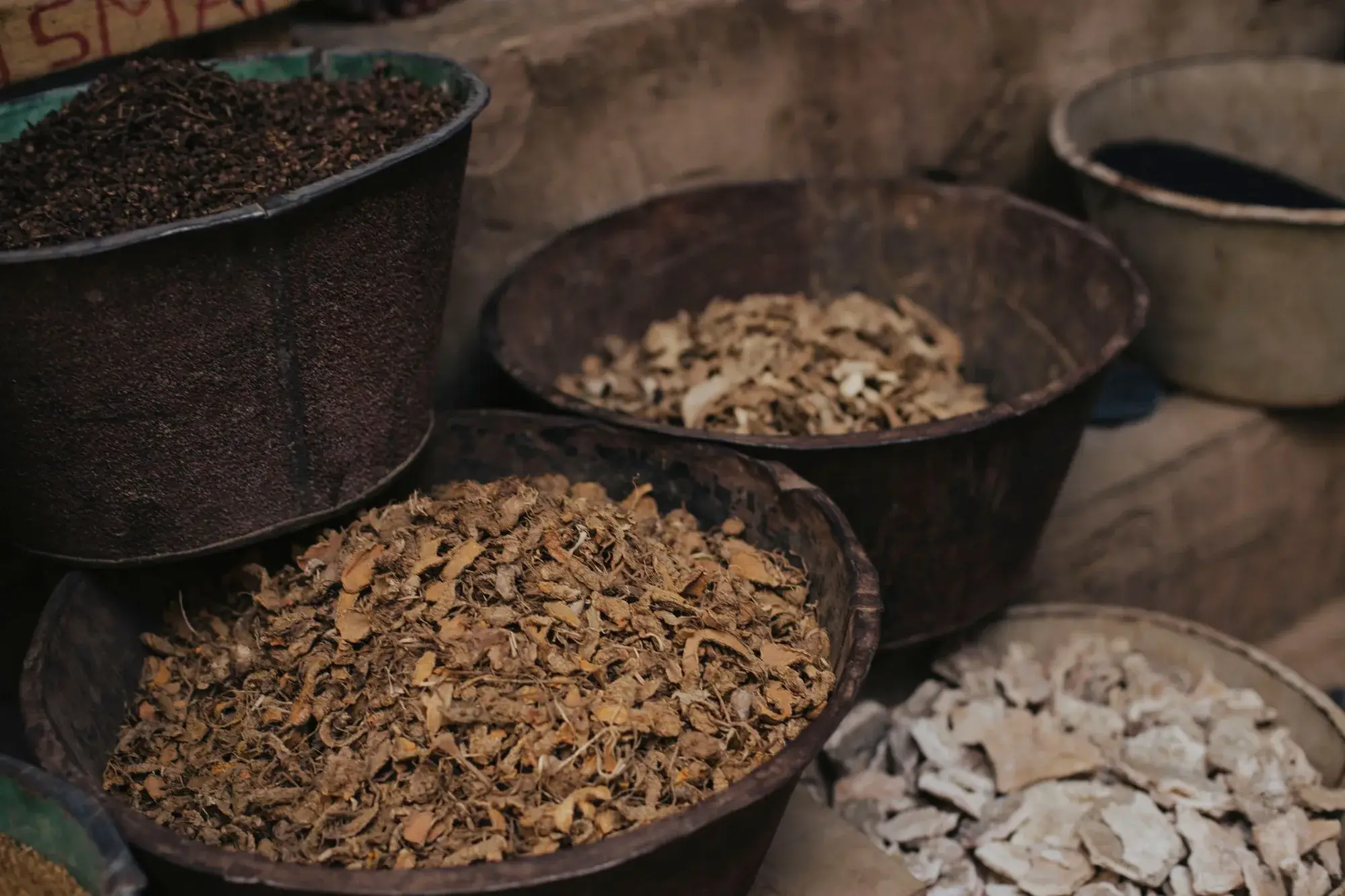
Walk into any old apothecary in an Indian bazaar and somewhere near the front there will be two jars of what looks like broken amber. Both are called gond. They come from different trees, they are prepared in opposite ways, and they belong to opposite ends of the year.
Sold side by side and explained to nobody, they cause more confusion than anything else we stock. Here is the whole distinction, plainly.
What a tree gum is
When the bark of certain trees is cut or wounded, the tree seals the injury with a resin that hardens in the air into crystalline tears. Those tears are collected, sorted and sold. Nothing is manufactured and nothing is extracted — the tree makes it and a person picks it up.
Gond katira: cold water, summer
Gond katira is tragacanth gum, and it is a summer ingredient across North India. It is never eaten dry. Soaked in cold water it absorbs many times its own volume and turns into a soft, translucent, almost flavourless gel, which is then stirred into cold drinks.
- Half a teaspoon of crystals in a cup of cold water is one serving. It looks like far too little until it swells.
- Leave it overnight, or for at least four hours. There is no way to hurry this.
- Cold water only. Warm water makes it clump and it will never set into a proper gel.
- Drain off any water that has not been absorbed, then stir the gel into cold milk, sharbat, lemon water or falooda.
- Never eat the crystals dry. They must be fully soaked first, and you should drink water alongside them.
Babul gond: hot ghee, winter
Babul gond is acacia gum, collected as hardened amber tears from the bark of the babul tree, and it is treated in exactly the opposite way. It is roasted, not soaked. Dropped into hot ghee it puffs up like popcorn, turns pale and crisp, and is then crushed into laddoos and other winter preparations.
- Heat ghee in a pan over a low flame — low, because the gum burns before it puffs if the pan is too hot.
- Add the pieces a few at a time. Crowding the pan drops the temperature and the gum goes chewy instead of crisp.
- Lift them out as they puff and turn pale, then cool and crush lightly.
- Fold the crushed gum into laddoo mixtures with jaggery, nuts and flour.
- Store the roasted gum airtight. It goes soft again if it is left out.
One is soaked cold and drunk in May. The other is fried in ghee and eaten in January. They are not the same jar.
The differences, side by side
- Source: gond katira is tragacanth gum. Babul gond is acacia gum from the babul tree.
- Method: gond katira is soaked in cold water. Babul gond is roasted in hot ghee.
- Season: gond katira is used in summer. Babul gond is a winter ingredient.
- Form when used: gond katira becomes a soft clear gel. Babul gond becomes a crisp puffed solid.
- Taste: gond katira is essentially neutral and takes on whatever it is stirred into. Roasted babul gond is faintly nutty.
- Sizes here: gond katira 200 g, babul gond 200 g. Both are single-ingredient.
Honest cautions
- Both are swelling gums, so drink enough water with them and start with a small quantity rather than a heaped spoon.
- Never swallow unsoaked gond katira crystals — soak them fully, every time.
- Anyone who has difficulty swallowing should be careful with gel-forming foods generally.
- Keep both dry and airtight. Damp is what ruins a gum, and once it has clumped in the pouch it will not soak evenly.
- If you are pregnant, nursing or taking prescribed medication, ask your doctor before adding anything new as a daily habit.
The same two gums, and the way each one is actually used at home.
Gond Katira
Edible tragacanth crystals, 200 g. Soaked in cold water, it swells to roughly ten times its volume.
- Summer sharbat
- Half a teaspoon soaked overnight in cold water, drained, then stirred into rose sharbat or lemon water with ice.
- Falooda and cold milk
- The same soaked gel spooned into cold milk with basil seeds, or into a falooda.
Babul Gond
Edible acacia gum, 200 g. Roasted in ghee until it puffs — a winter ingredient, not a summer one.
- Gond laddoo
- Puffed in ghee, crushed, and folded into a laddoo mixture with jaggery and nuts.
- Winter panjiri
- Crushed through roasted flour and dry fruit as part of a traditional winter preparation.
Common questions
How long do you soak gond katira?
At least four hours, and overnight is better. Put about half a teaspoon of crystals in a cup of cold water and leave it. The crystals swell into a soft translucent gel roughly ten times their original volume. Drain any water that has not been absorbed before using it.
Can I soak gond katira in warm water to speed it up?
No. Gond katira needs cold water and time. Warm water makes it clump and it will not set into a proper gel.
What is the difference between gond katira and babul gond?
They are different gums used in opposite ways. Gond katira is tragacanth, soaked in cold water into a gel, and is a summer cooling ingredient. Babul gond is acacia gum, roasted in ghee until it puffs, and is a winter ingredient for laddoos. They are not interchangeable.
Is gond katira vegan?
Yes. It is a tree gum with no animal ingredient. Note that babul gond is traditionally roasted in ghee, so that preparation is not vegan unless you use a plant fat instead.
Does gond katira have a taste?
Almost none. That is the point of it — it takes on the flavour of the milk, sharbat or juice it is stirred into, and adds texture rather than taste.
How much does a 200 g pack of gond katira make?
A great deal. Half a teaspoon is a single serving once soaked, so a 200 g pouch is many months of daily use through a summer.
A note on claims. Everything above describes how these ingredients have traditionally been used, and how we suggest using them. Beyond Herba sells food, not medicine. Nothing here is intended to diagnose, treat, cure or prevent any disease.
From the range
What this piece is about
 30% off
Gond Katira
200 g
₹480