

Superfoods
3 Seed or 7 Seed: what is in the pouch, and how to eat it every day
Seven raw seeds against three, why nothing is roasted or salted, what a portion actually looks like — and the storage mistake that quietly ruins a good mix.
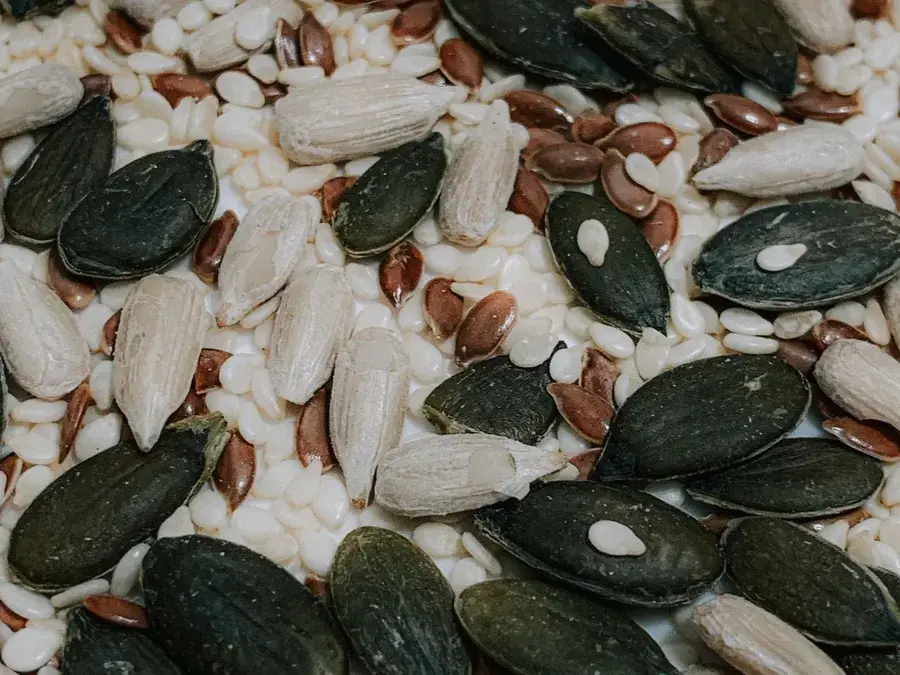
A seed mix is the least glamorous thing we sell and probably the easiest to actually keep up. There is no method to learn, nothing to soak and nothing to brew. There are only two real questions: which of the two mixes, and how to stop it going stale in the cupboard.
What is in each pouch
- 3 Seed Mix — pumpkin, sunflower and sesame. 250 g.
- 7 Seed Mix — the same three, plus flax, chia, melon and hemp. 250 g.
- Both are raw, unroasted and unsalted, with nothing else added.
The choice between them is mostly about what you want to do with the mix. The three-seed is the plainer, more forgiving one — bigger seeds, mild flavour, and it disappears into cooking without anyone noticing. The seven-seed brings flax and chia, which swell and thicken in liquid, and hemp and melon, which are softer and richer. If it is going into porridge, yoghurt or a smoothie, the seven-seed does more. If it is going into roti dough and salads, the three-seed is the sturdier choice.
Why nothing is roasted or salted
Roasting and salting are how seeds are sold as a snack, and both narrow what you can do with them afterwards. A salted seed cannot go into a sweet dish; a roasted seed cannot be roasted again to order. Raw seeds go either way — into a chikki with jaggery, into a salad, into dough, into a bowl of curd — and you can toast a handful in a dry pan yourself in two minutes if that is what a dish wants.
Both mixes are a natural source of dietary fibre and unsaturated fats. That is a statement about seeds, and it is as far as anyone honest can take it.
How much, and how to use it
- A small handful is a sensible daily portion. Seeds are dense; a bowlful is not the goal.
- Sprinkle over salad, yoghurt, porridge or a smoothie bowl.
- Fold a spoonful into roti or paratha dough before rolling.
- Toast a handful in a dry pan and scatter over dal or a stir-fry.
- Set them into a chikki with our jaggery for something closer to a sweet.
- If flax and chia are new to you, remember they take up liquid — a spoon of the seven-seed in a glass of water will thicken if it sits.
A seed mix does not need a ritual. It needs an airtight jar and somewhere cool to sit.
The storage mistake
Seeds are largely oil, and oil goes rancid when it meets air, warmth and light. This is the one genuine disadvantage of buying a good raw mix rather than a roasted, salted, sealed snack: it has a shorter working life once it is open, and nothing about the pouch will tell you when it has turned except your nose.
- Decant into an airtight jar once the pouch is open, or reseal it tightly every time.
- Keep it out of sunlight and away from the hob. A cool, dark cupboard is enough.
- In a hot Indian summer, or if you are working through it slowly, the fridge is a reasonable place for it.
- Smell it before you use it. Rancid seeds smell sharp and faintly of old paint, and there is no rescuing them.
Honest notes
- Fibre is not a free lunch. If seeds are new to your day, start with a spoon rather than a fistful.
- Whole flax is small and hard and is often swallowed intact — many people grind it, or grind a week of it at a time, before adding it to food.
- Sesame is a declared allergen, and both mixes contain it. Check the pack if you are buying for someone else.
- These are food, not a supplement, and we do not sell them as one.
The two mixes, and what each one is genuinely better at.
3 Seed Mix
Pumpkin, sunflower and sesame. Raw and unsalted, 250 g. The plainer, sturdier mix.
- Into the dough
- A spoonful folded into roti or paratha dough, where the larger seeds hold their bite.
- Dry-toasted
- A handful toasted in a dry pan for two minutes and scattered over dal, salad or a stir-fry.
7 Seed Mix
The same three plus flax, chia, melon and hemp. Raw and unsalted, 250 g.
- Breakfast bowl
- A spoon over curd, porridge or a smoothie bowl, where the flax and chia thicken as they sit.
- Overnight soak
- Stirred into milk or water the night before with a spoon of honey, for something closer to a pudding by morning.
Common questions
What is the difference between the 3 Seed Mix and the 7 Seed Mix?
The 3 Seed Mix is pumpkin, sunflower and sesame. The 7 Seed Mix contains all three of those plus flax, chia, melon and hemp seeds. Both are raw, unroasted and unsalted, and both are 250 g.
Are the seeds roasted or salted?
Neither. Both mixes are raw, unroasted and unsalted, which is what lets them go into cooking as readily as into a bowl. You can toast a handful in a dry pan yourself if a dish calls for it.
How many seeds should I eat in a day?
A small handful is a sensible daily portion. Seeds are dense in fat and fibre, so more is not better, and it is worth starting with less if they are new to your routine.
How should seeds be stored?
Airtight, cool and out of the light. Seeds are largely oil and turn rancid on exposure to air and warmth. In a hot summer the fridge is a reasonable place for an opened pack.
Should flax seeds be ground?
Many people grind them, because whole flax is small and hard and is often swallowed intact. Grinding a few days worth at a time and keeping it in the fridge is the usual approach.
Do these mixes contain allergens?
Both contain sesame, which is a declared allergen. The full ingredient list is on the pack and on each product page.
A note on claims. Everything above describes how these ingredients have traditionally been used, and how we suggest using them. Beyond Herba sells food, not medicine. Nothing here is intended to diagnose, treat, cure or prevent any disease.
From the range
What this piece is about
 30% off
3 Seed Mix
250 g
₹500
 30% off
7 Seed Mix
250 g
₹600
 20% off
Moringa Powder
200 g
₹700