

Ayurvedic tonics
Shilajit resin: where it comes from and how to take it properly
What the resin actually is, why it is sold by the gram, how to judge one before you buy it, and the rice-grain serving that almost every first-time buyer gets wrong.
High in the mountains, in the few warm weeks that pass for summer up there, the rock begins to weep. A dark, slow resin gathers in the cracks of the cliff face and is scraped out by hand. It is one of the strangest things sold as food anywhere in India, and one of the most misunderstood.
Most of that misunderstanding is practical rather than mystical. People buy a jar, take far too much of it, find it bitter and sticky and difficult, and leave it at the back of a cupboard. So this piece is mostly method: what shilajit is, how it is made fit to sell, how to judge one, and how to actually take it.
What shilajit actually is
Shilajit is not a herb. Nothing is harvested for it, and no plant is ground up to make it. It is a resin that seeps out of high-altitude rock when the temperature rises — plant matter compressed inside the mountain over an extraordinarily long time and pushed back out through the stone as a dark, tar-like exudate. It carries fulvic acid and trace minerals, which is why it is described as mineral-rich rather than as a botanical.
Because it is scraped off rock, the raw material arrives with grit, sand and plant debris in it, and nobody should sell it in that state. Purification — shodhana, in Ayurvedic practice — is the step that turns a rock scraping into a product: the raw resin is dissolved, the insoluble matter is separated out, and the liquid is reduced back down to a resin. What you buy should be the result of that process rather than the material that went into it.
Why resin, and not a capsule
- Resin is the traditional form. It is what the classical texts describe being taken, and it is what the mountain actually produces.
- A powder or a capsule has to be carried on something — a filler, a flow agent, a bulking base. A resin is one ingredient with nothing to hide behind.
- You can inspect a resin. You can see its colour, smell it, feel it stiffen in the cold and watch how it behaves in warm water. A sealed capsule tells you none of that.
- It is sold by the gram — 1 g, 5 g and 10 g in our range — which makes the only honest comparison possible: price per gram, not price per jar.
How to take it
A portion the size of a grain of rice, once a day. That is the entire serving, and it is where most people go wrong. Shilajit is not a scoop-and-shake powder, and a teaspoon of it is not a generous dose — it is a waste of an expensive material.
- Lift a rice-grain-sized portion on the end of a clean, dry spoon, once daily.
- Dissolve it in warm water or warm milk. Not boiling, and not cold — cold liquid will barely dissolve it at all.
- Stir for twenty or thirty seconds. It should disperse and darken the liquid, like very strong tea.
- Do not chew it neat unless you enjoy the taste of a bonfire.
- Do not exceed the stated serving. The practice is consistency over weeks, not quantity in a morning.
Handling the jar
Purified resin is soft, sticky and temperature-sensitive, and all three are signs it is what it says it is. It stiffens on a cold shelf and softens in a warm hand. If it is too firm to work with, stand the closed jar in warm water for a minute and it turns pliable. Always use a dry spoon — water left behind in the jar is the one thing that will spoil it.
A grain of rice a day is the whole of it. Everything else about shilajit is patience.
How to judge a resin before you buy it
There is a great deal of poor shilajit sold in India and a certain amount that is not shilajit at all. No kitchen test is conclusive, but these are the checks worth making, and they are the ones we would apply to anybody else's jar as readily as to our own.
- It should dissolve in warm water and leave very little behind. A layer of sand at the bottom of the glass is sand.
- It should respond to temperature — firm out of a cold cupboard, softer in the hand. A resin that never changes has usually been cut with something that does not.
- The label should state one ingredient and a net quantity in grams. Anything sold as a proprietary blend is a blend, whatever the front of the pack says.
- Be sceptical of a large tub at a small price. Purified resin is expensive per gram, which is precisely why it is sold in single-figure gram quantities.
- Compare price per gram, never price per jar. It is the only comparison that survives different pack sizes.
The honest disadvantages
Better said now than discovered after the jar arrives.
- The taste is strong: earthy, tarry and properly bitter. Warm milk hides more of it than water does, and a spoon of honey stirred in once the cup has cooled hides more still.
- It is fiddly. It sticks to the spoon, the jar and itself, and in cold weather it has to be warmed before it will move at all.
- It is expensive per gram. That is the material rather than the packaging, and it is why the serving is so small.
- It is a concentrated traditional preparation, not an everyday food. If you are pregnant or nursing, taking prescribed medication, or managing a health condition, speak to your doctor before starting anything of this kind.
The two ways we take it, and the root that traditionally sits on the same shelf.
Shilajit
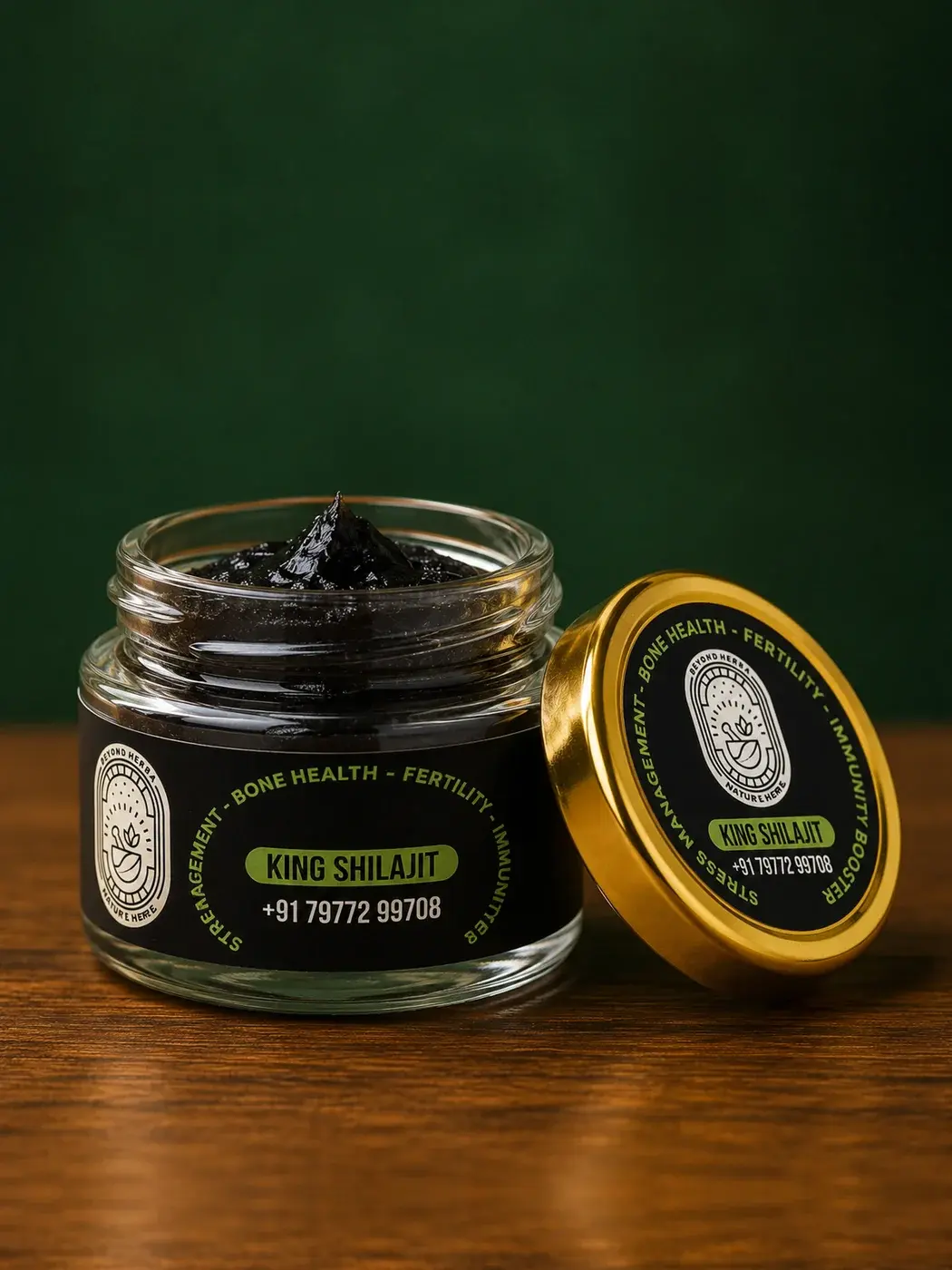
Purified Himalayan resin, sold in 1 g, 5 g and 10 g. A rice-grain portion is one serving.
- Morning water
- A rice-grain portion dissolved in a small cup of warm water, taken before breakfast.
- Evening milk
- The same portion stirred into warm milk at night, which carries the taste far better than water does.
Safed Musli
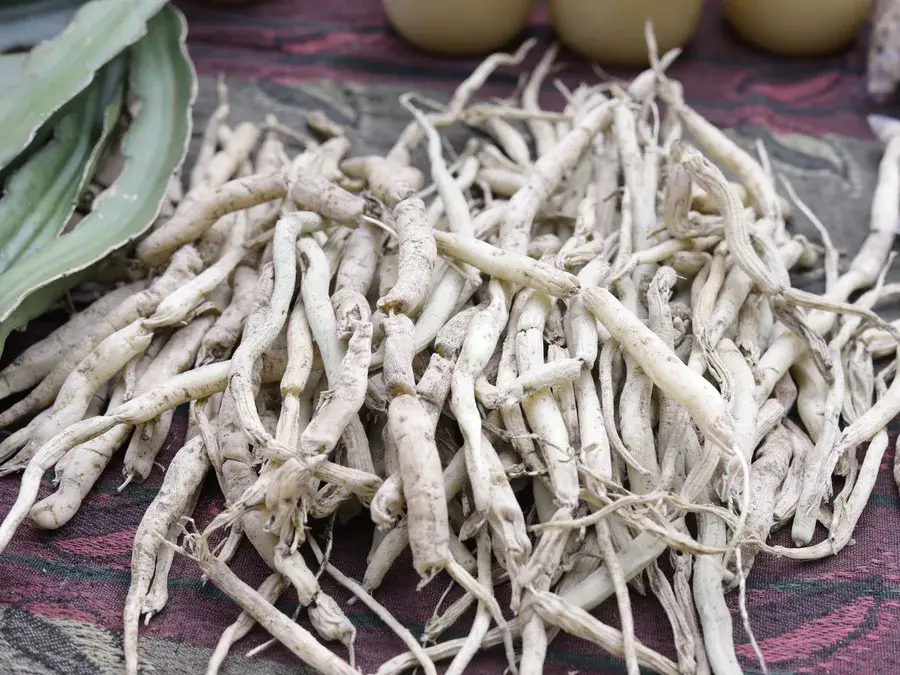
The dried root of Chlorophytum borivilianum, traditionally taken with warm milk rather than water, because its saponins carry better in fat.
- Warm milk at night
- A quarter to half a teaspoon stirred into warm milk, once daily and taken consistently.
- Folded into food
- Stirred through yoghurt or blended into a smoothie if milk at night is not your habit.
Common questions
How much shilajit should I take in a day?
A portion roughly the size of a grain of rice, once a day. Shilajit is a resin and is taken in far smaller quantities than a powdered supplement — a teaspoon is not a generous dose, it is a mistake.
How do you dissolve shilajit resin?
Drop a rice-grain-sized portion into a small cup of warm, not boiling, water or milk and stir for twenty to thirty seconds. It should disperse and darken the liquid. Cold water will barely dissolve it.
Why is my shilajit hard and difficult to scoop?
Because it is cold. Purified resin stiffens at low temperatures and softens in warmth. Stand the closed jar in warm water for a minute and it becomes pliable again. That temperature response is normal, and is one sign of a genuine resin.
Is shilajit vegetarian?
It is not an animal product. Shilajit is plant matter that has been compressed and transformed inside rock over a very long period, and seeps back out of the rock as a resin.
How long does a 5 g jar of shilajit last?
A rice-grain portion is a small fraction of a gram, so a 5 g jar taken once daily lasts many weeks. That is why resin is sold in single-figure gram quantities rather than by the hundred grams.
Can I take shilajit with tea or coffee?
The traditional carriers are warm water and warm milk, and both suit it better. Very hot liquid is best avoided in any case — let anything boiling stand for a minute first.
A note on claims. Everything above describes how these ingredients have traditionally been used, and how we suggest using them. Beyond Herba sells food, not medicine. Nothing here is intended to diagnose, treat, cure or prevent any disease.
From the range
What this piece is about
 30% off
Shilajit
1 g – 10 g · 3 sizes
from₹1,000
 30% off
Safed Musli
100 g – 1 kg · 3 sizes
from₹800
 20% off
Moringa Elixir
250 g
₹1,000